PVC vs Wood vs MDF Shutters: Which Material Wins?
Published on 10 August 2026
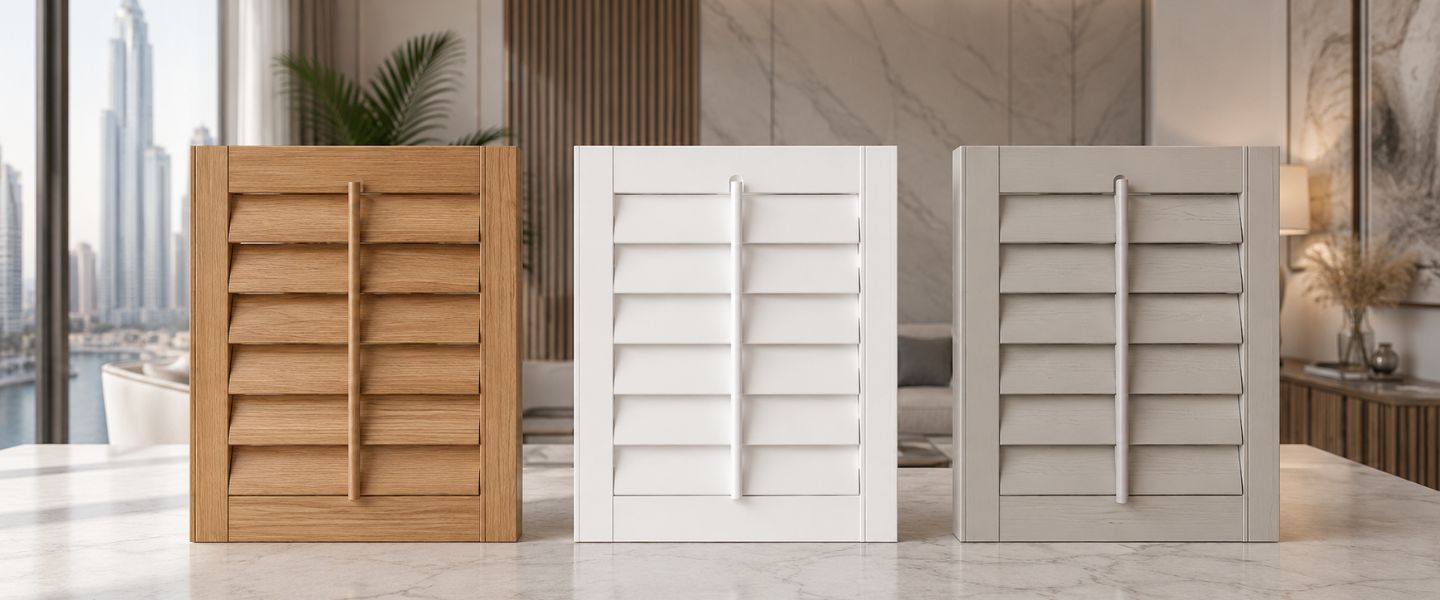
Sara stood in the middle of our Al Quoz showroom holding three shutter samples, one in each hand and one tucked under her arm. “They all look lovely,” she said, “but which one is actually right for my home?” She had a sunny living room, a steamy family bathroom, and a budget she wanted to respect. Sound familiar?
It is easily the most common question we hear. Wood, PVC and composite shutters can look almost identical on a showroom shelf, yet they behave very differently once they are living on your windows, especially in Dubai's heat and humidity.
So let's settle it. In this guide we compare PVC vs wood vs composite shutters on the things that actually matter: looks, durability, cost, moisture resistance and how well they cope with the local climate, so you can choose the right material for every room with confidence.
The Three Main Shutter Materials at a Glance
Before we dig into each one, here is the short version. Most made-to-measure shutters are built from one of three materials:
-
Wood (solid basswood): the premium, natural choice with the richest look.
-
PVC (vinyl): a waterproof, budget-friendly option built for wet and humid rooms.
-
Composite / faux wood (MDF core): an engineered middle ground that mimics wood at a lower price.
Each has a clear sweet spot. Let's look at them one by one.
Wood (Solid Basswood) Shutters
Solid wood is the classic plantation shutter material, and basswood is the gold standard. It is light, strong and takes paint beautifully, which is why it is our premium option for most interior rooms. Our solid panel and full height shutters are typically made from it.
Pros
-
The most natural, high-end look and feel
-
Strong yet lightweight, so panels can be larger with fewer joins
-
Great natural insulation against Dubai's heat
-
Can be colour-matched to almost any paint shade
Cons
-
Not ideal for constantly wet areas like showers
-
Usually the highest upfront cost of the three
|
MARKET INSIGHT The global window shutters market is projected to grow from USD 3.78 billion in 2025 to USD 5.21 billion by 2030 (CAGR 6.7%). Relevance: shutters keep winning fans worldwide thanks to their durability and premium look, and solid wood remains the benchmark that other materials are measured against. Source: The Business Research Company |
PVC (Vinyl) Shutters
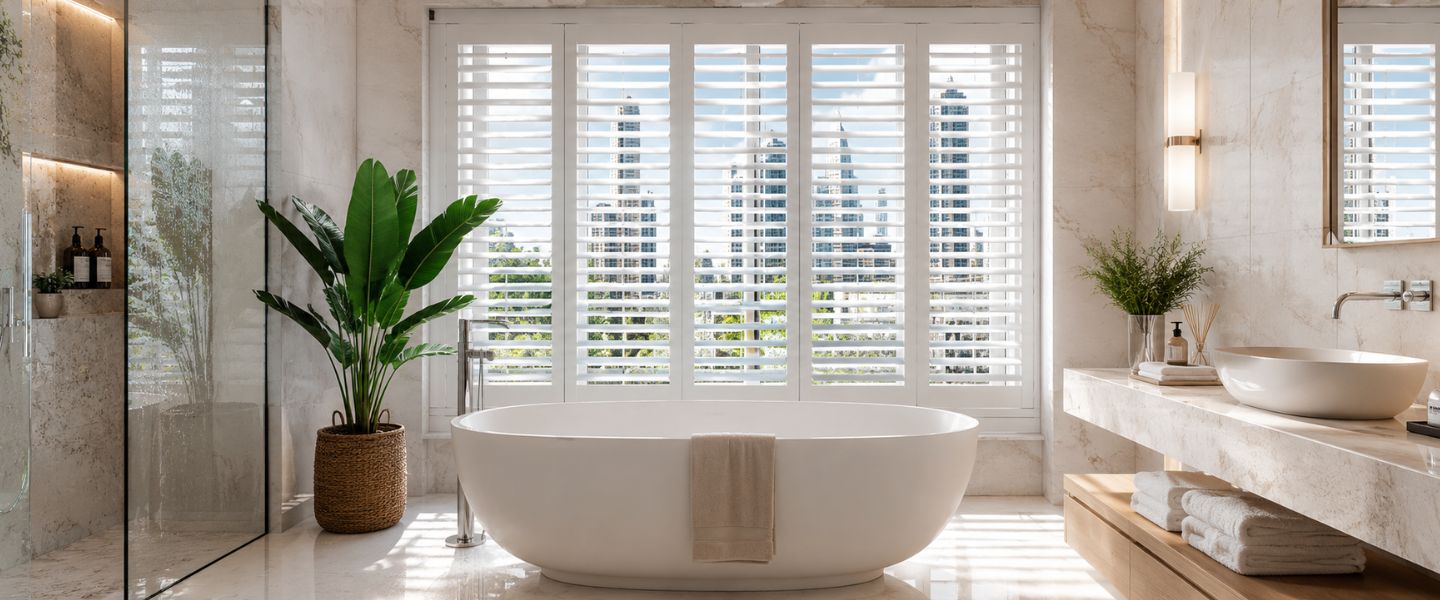
PVC shutters are made from moisture-proof vinyl, which makes them the smart choice for humid, splash-prone rooms. If you want shutters for a bathroom or a busy kitchen, this is usually the material we recommend.
Pros
-
Completely water-resistant and humidity-resistant
-
Wipes clean in seconds, ideal for steam and splashes
-
Often the most budget-friendly option
-
Will not warp, crack or peel in wet conditions
Cons
-
Heavier than wood, so very wide panels may need extra support
-
The finish looks slightly less “natural” than real wood up close
Composite / Faux-Wood (MDF) Shutters
Composite shutters, often called faux wood, are built around an engineered MDF core and finished to look like painted timber. They sit neatly between wood and PVC on both price and performance, which is why they are such a popular all-rounder for bedrooms, living areas and standard windows.
Pros
-
A wood-like l less than solid timber
-
Stable and resistant to everyday warping
-
A cost-effective choice for small to medium windows
Cons
-
Heavier than basswood, limiting very large panel sizes
-
Not suited to constantly wet areas the way PVC is
|
MARKET INSIGHT The global window coverings market was valued at about USD 34.5 billion in 2023 and is expected to reach USD 60.16 billion by 2030 (CAGR 8.5%). Relevance: as demand for window treatments climbs, manufacturers offer more material choices than ever, making it more important to match the right material to the right room. Source: Grand View Research |

PVC vs Wood vs MDF: Side-by-Side Comparison
|
Feature |
Wood (Basswood) |
PVC (Vinyl) |
Composite (MDF) |
|---|---|---|---|
|
Look |
Most natural, premium |
Clean, slightly synthetic |
Wood-like, painted |
|
Water resistance |
Low |
Excellent |
Moderate |
|
Weight |
Light |
Heavier |
Heavier |
|
Typical cost |
Highest |
Lowest |
Mid-range |
|
Best rooms |
Living, bedroom, study |
Bathroom, kitchen |
Bedroom, living, standard windows |
|
Insulation |
Excellent |
Good |
Good |
|
Not Sure Which Material Suits Your Windows? See and feel all three materials for yourself. Browse our shutter range, or get an instant price for your windows in seconds with our online estimator. |

Which Material Wins? It Depends on the Room
There is no single champion, because the best material depends on where the shutters are going and what matters most to you. Here is our quick recommendation guide.
|
Your Priority / Room |
Best Material |
Why |
|---|---|---|
|
Premium, natural look |
Wood |
Nothing beats real basswood for warmth and finish |
|
Bathroom / kitchen |
PVC |
Fully water-resistant and easy to wipe clean |
|
Best value for money |
Composite |
Wood-like looks at a friendlier price |
|
Very large windows |
Wood |
Light and strong for bigger panels |
|
Tight budget |
PVC |
Usually the most affordable option |
|
Bedrooms & living rooms |
Wood or composite |
Great looks and insulation where it is dry |
|
MARKET INSIGHT The UAE blinds and shades market is set to grow from USD 647.5 million in 2024 to USD 997.0 million by 2030 (CAGR 7.7%). Relevance: with more UAE homeowners investing in tailored window treatments, choosing a material suited to the local heat and humidity pays off in the long run. Source: Grand View Research |

What We Recommend for Dubai's Climate
In practice, most Dubai homes use a mix. We suggest solid basswood or composite for dry living spaces and bedrooms, and waterproof PVC for bathrooms, kitchens and other humid areas. For balconies and windows exposed to full sun, powder-coated aluminium outdoor shutters are the tough, weatherproof answer. The good news is that you do not have to decide alone, our team matches the right material to every room during your free visit.
|
Let Shutters Dubai Help You Choose Shutters Dubai makes and fits made-to-measure shutters in solid basswood, PVC and MDF for homes across Dubai and the UAE, handling everything from your first consultation to the final fit. Why homeowners choose us: a free, no-pressure home design visit with samples of every material, expert advice on the right choice for each room, an instant on-the-spot quote, professional installation by our own team, and a 5-year warranty on every job. |
Frequently Asked Questions
Which shutter material is best for bathrooms?
PVC. It is fully waterproof and shrugs off steam and splashes, so it is our go-to for bathroom shutters and kitchens.
Are wood shutters worth the extra cost?
If you want the most natural, high-end look in a dry room, yes. Basswood is light, strong and colour-matchable, and it lasts for years with simple care.
What is the difference between composite and PVC shutters?
Composite has an engineered wood (MDF) core finished to look like timber, while PVC is solid moisture-proof vinyl. Composite looks more wood-like; PVC handles water far better.
Which material is the cheapest?
PVC is usually the most budget-friendly, with composite in the middle and solid wood at the top. Exact prices depend on window size and finish.
Can I mix materials in one home?
Absolutely, and most people do. See our FAQs for more, or ask our designer to plan the ideal mix for your rooms.
The Verdict
So which material wins? The honest answer is that it depends on the room. Wood wins on looks and insulation, PVC wins in wet areas and on price, and composite wins as the balanced all-rounder. Choose per room and your whole home benefits.
Want a second opinion tailored to your windows? Book a free home visit and let Shutters Dubai recommend, measure and fit the perfect material for every room, backed by a 5-year warranty.